Summary of 3D Tests
of 101 Video Cards Manufactured in 1999-2004
(October, 2004)
|
Contents
- Introduction
- List of video cards
- Testbed configurations, benchmarks
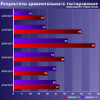
- Test results: ALL DIAGRAMS ON ONE PAGE
- Test results: Serious Sam: The Second Encounter
- Test results: Code Creatures DEMO
- Test results: Unreal Tournament 2003
- Test results: Unreal II: The Awakening
- Test results: RightMark 3D
- Test results: TRAOD
- Test results: FarCry
- Test results: Call Of Duty
- Test results: HALO: Combat Evolved
- Test results: Painkiller
- Test results: Splinter Cell
- Test results: Return to Castle Wolfenstein
- Test results: Quake3 Arena
- Test results: DOOM III
- Conclusions
It took us almost a month to carry out all the tests, which results
we are presenting to you now. This task has traditionally become annual,
but this time we publish the results in October instead of December.
We believe that this report will help many users compare certain video
cards to each other and choose a correct purchase on the threshold
of holidays, if they are planning to buy a 3D accelerator, of course.
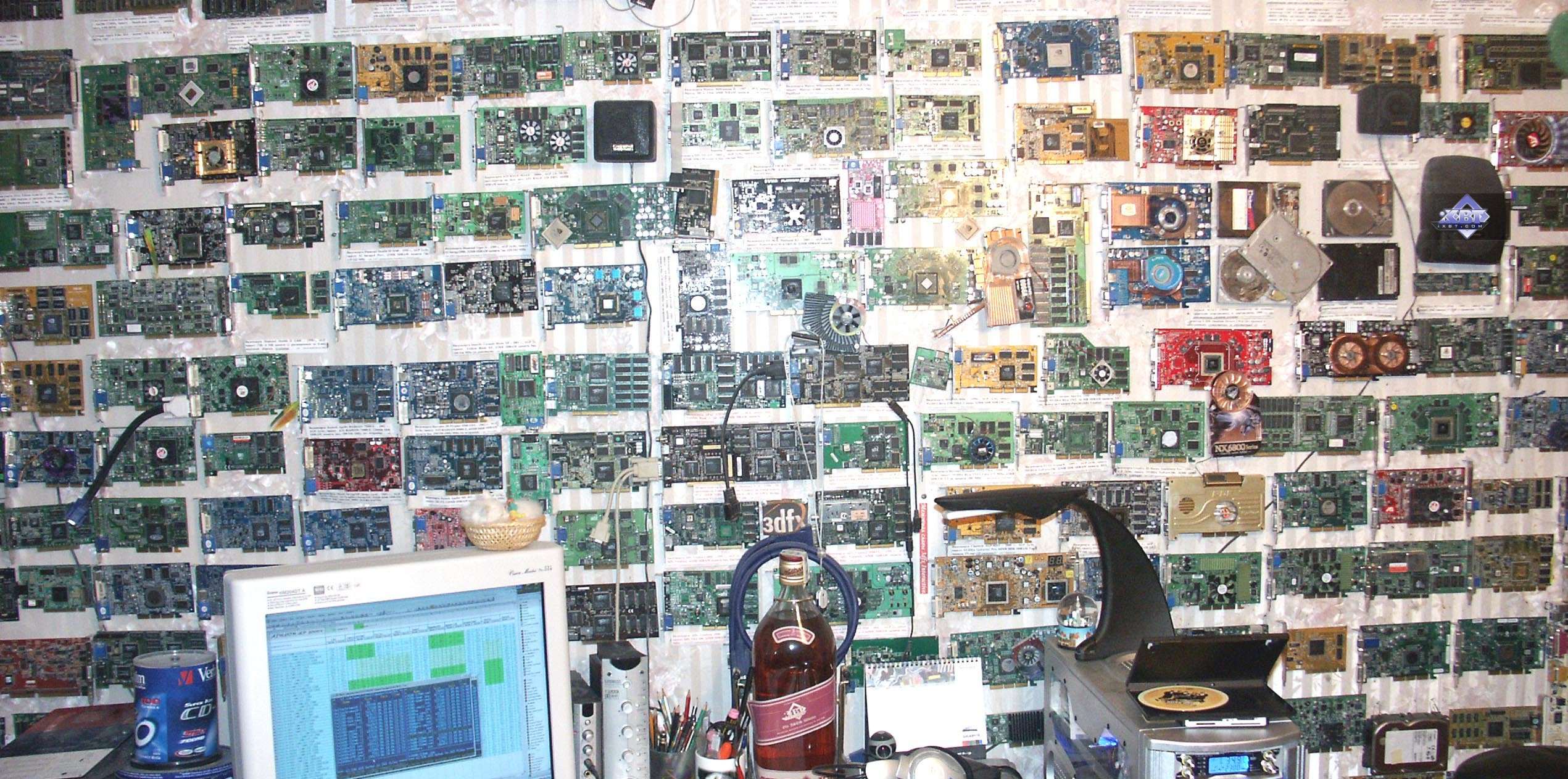
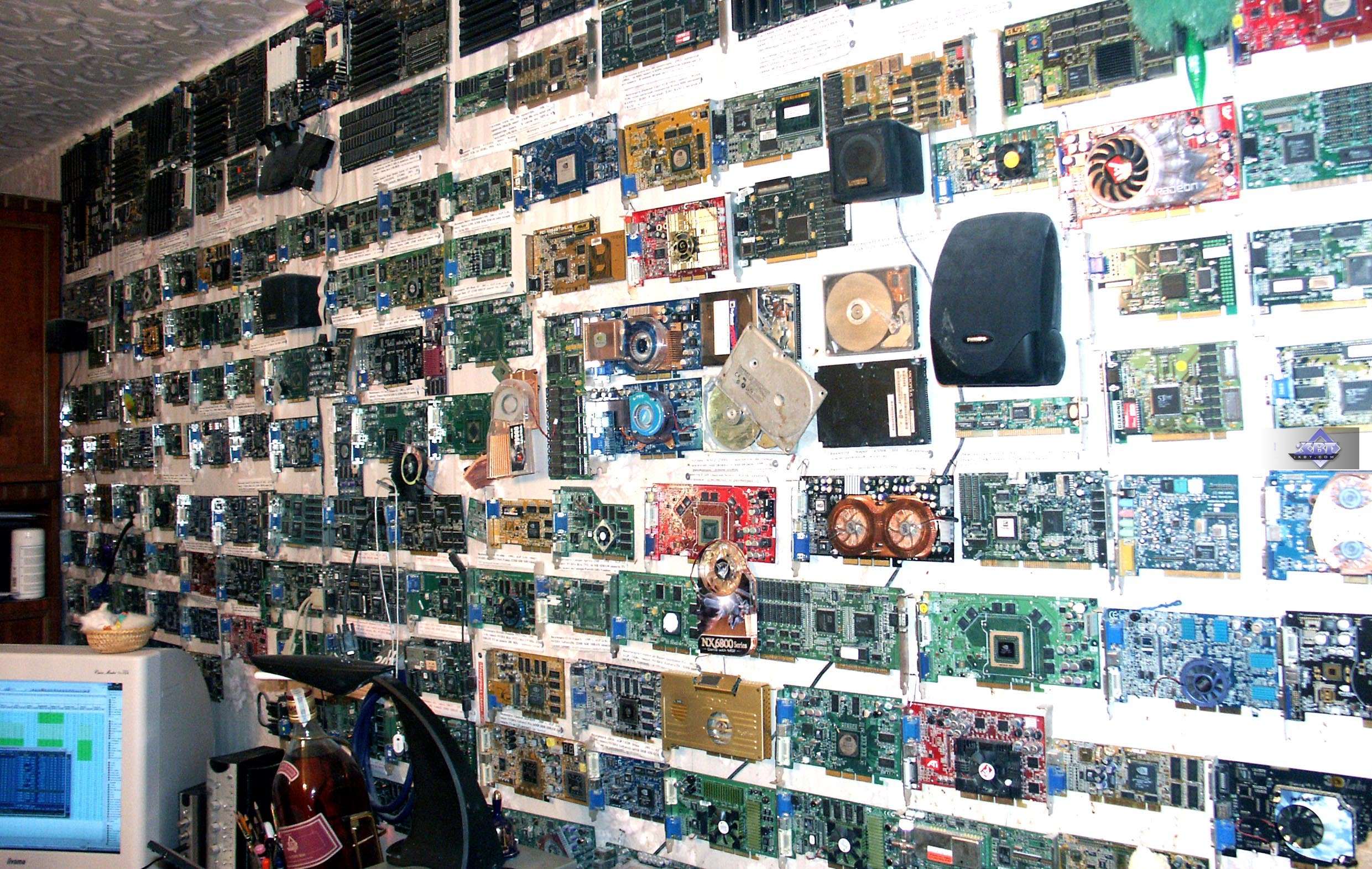
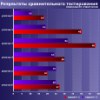
We have tested 101 video cards in 14 tests at two resolutions –
800x600 and 1024x768. These resolutions are selected to demonstrate
the capacity and potential of old and weak (for these days) accelerators.
But some of them (the most powerful) have also been tested with AA
(antialiasing) 4x and AF (anisotropic filtering) 16x (or 8x in those
cards, where AF is limited to this rate). Quality settings –
Quality/High Quality.
So, the list of video cards. Contenders are listed in the CHRONOLOGICAL
ORDER, approximately according to their appearance on the market.
Video Cards
Testbed configurations:
- Athlon XP 3000+ based computer
- AMD Athlon XP 3000+ CPU (2166 MHz)
- MSI KT7 Ultra-2 mainboard based on VIA KT333
- RAM: 1 GB DDR SDRAM PC 3200
- Seagate Barracuda 7200.7 80GB SATA HDD
- Operating system – Windows XP SP2; DirectX 9.0c
- Monitor: Mitsubishi Diamond Pro 2070sb (22").
- Drivers:
- ATI v6.476 (CATALYST 4.9)
- NVIDIA v65.76
- for Voodoo4 - Amiga 3.0
- for Savage4 - 8.40.02
- for Savage2000 - 9.21.01
- PowerVR - 21.00.07
- Matrox G550 - 5.92.006; Parhelia - 1.07.00.
- for DeltaChromeS8 - 15.10.11
VSync is disabled.
ATTENTION! In games using shader technologies the test results
ARE SPLIT INTO SEVERAL DIAGRAMS: without shaders, Shaders 1.1 and
2.0. ZEROS in SOME VIDEO CARDS mean that THIS TEST (GAME) COULD NOT
BE RUN ON THIS CARD, or AN ERROR OCCURRED.
Test results: performance comparison
We used the following test applications:
- Serious Sam: The Second Encounter v.1.05 (Croteam/GodGames) –
OpenGL, multitexturing, ixbt0703-demo, test settings: quality, S3TC
OFF
- Unreal Tournament 2003 v.2225 (Digital Extreme/Epic Games) –
Direct3D, Vertex Shaders, Hardware T&L, Dot3, cube texturing,
default quality
- Code Creatures Benchmark Pro (CodeCult) – gaming test demonstrating
how the video card works with DirectX 8.1, Shaders, HW T&L.
- Unreal II: The Awakening (Legend Ent./Epic Games) – Direct3D,
Vertex Shaders, Hardware T&L, Dot3, cube texturing, default
quality
- RightMark 3D v.0.4
(one of game scenes) – DirectX 8.1, Dot3, cube texturing,
shadow buffers, vertex and pixel shaders (1.1, 1.4).
- Tomb Raider: Angel of Darkness v.49 (Core Design/Eldos Software)
– DirectX 9.0, Paris5_4 demo. The tests were conducted with
the quality set to maximum, only Depth of Fields PS20 was disabled.
- HALO: Combat Evolved (Microsoft) – Direct3D, Vertex/Pixel
Shaders 1.1/2.0, Hardware T&L, maximum quality
- PainKiller v.1.31(People Can Fly/Dreamcatcher) – DirectX
9.0, multitexturing, maximum possible test settings. Integrated
benchmark was used.
- Tom Clancy's Splinter Cell v.1.2b (UbiSoft) – Direct3D,
Vertex/Pixel Shaders 1.1/2.0, Hardware T&L, Very High settings;
demo 1_1_2_Tbilisi
- Call of Duty (MultiPlayer) (Infinity Ward/Activision) –
OpenGL, multitexturing, ixbt0104demo, test settings – maximum,
S3TC ON
- FarCry 1.2 (Crytek/UbiSoft), DirectX 9.0, multitexturing, demo01
(research) (the game was started with the -DEVMODE option), test
settings – Very High.
- Quake3 Arena v.1.17 (id Software/Activision) – OpenGL,
multitexturing, ixbt0703-demo, all test settings to maximum: detailing
level – High, texture details –
#4, S3TC OFF, curved surfaces are strongly smoothed
using variables r_subdivisions "1"
and r_lodCurveError "30000" (note that by
default it's r_lodCurveError «250» !),
- Return to Castle Wolfenstein (MultiPlayer) (id Software/Activision)
– OpenGL, multitexturing, ixbt0703-demo, test settings –
all to maximum, S3TC OFF,
- DOOM III (id Software/Activision) – OpenGL, multitexturing,
test settings – Low Quality,
If you want to get the demo-benchmarks, which we use, contact me
at my e-mail.
You can download the summary table of results in Excel 2003 format
here.
| Code Creatures |
| 800x600 is not supported |
1024x768 |
In our 3DiGest
you can find more detailed comparisons of various video cards.
Conclusions
The bottom line is simple: we used the most powerful of the existing
platforms, which supports all AGP 1.0-3.0 video cards. That's why
we managed to test this number of accelerators. By the way, it should
be noted that our readers also learned how the outdated accelerators
deal with new games (as we can see, the majority of video cards produced
in 1999-2000 simply refuse to operate).
And the choice is up to the readers. :) You've got the info. Plenty
of it. :)
Write a comment below. No registration needed!
|
|
 |
|
|
|