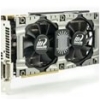
Gainward FX PowerPack Ultra/760 XP Golden Sample
on NVIDIA GeForce FX 5600 Ultra (400 MHz revision)
|

CONTENTS
-
Video card's features
-
Testbed
configuration, test tools, 2D quality
-
Performance
comparison
-
Conclusion
Imagine that you are about to buy a new car, say, Mercelada ABC-333.
You like it and you have enough money. But unexpectedly they say that the
car has been improved, the engine has got better characteristics and the
price is promised to be the same. The sales are expected a bit later...
You understand that and decide to wait a bit more... But when you see this
car in a store under the same trade mark you realize that the engine is
the same.
How do you feel? First of all, you feel deceived. Also, it's clear that
the improved car will be more expensive, and finally, how to tell the newer
model from the older one when the trade mark and name are the same?
This is what happened to the GeForce FX 5600 Ultra. NVIDIA put off the
release of these chips in order to improve the product, lift up the
core and memory speeds. The reviews below will give you an idea of the
previously announced 5600 Ultra.
Theoretical materials and reviews of video cards which concern functional
properties of the GPU NVIDIA GeForce FX
This is the video card clocked at 350/350 (700) MHz. But soon after announcement
of the GeForce FX 5900 we found out that NVIDIA started accelerating the
5600 Ultra. It was clear that the 400 MHz revision should be able to work at
400 MHz and get faster memory so that a user can have a more efficient
product at the same money. That was the dream and that would have been
a right step.
But the real situation was a bit different. Well, the 400 MHz revision is
finished, and we will test it today. And card makers have already started
developing such cards. But the sad thing is that NVIDIA deceived users
and maybe its partners by delivering them the old 5600 Ultra chips. The
markets is now filled with video cards based on the GeForce FX 5600 Ultra
350/350 (700) MHz instead of 400/400 (800) MHz (if we look at the characteristics
of the 5600 Ultra at NVIDIA's
site, we will see that it has 1600 M texels; divide it by 4 texture units
and you will get the core clock equal to 400 MHz).
Why do the currently sold 5600 Ultra 350 MHz have the same name, why
not 5600 Ultra LE or SE? Or why not to name the 400MHz cards 5600 Super-Ultra?
Gainward offers only one model based on this processor and we will examine
this card today. The company didn't start production of 350MHz cards in
favor of the 400MHz ones. That's a logical step. But what about Ultras
from Leadtek, Albatron and others? Would such respected card makers pass
less efficient solutions off as the Ultra cards? I doubt it.
Probably, the production of the 400MHz chips was delayed and NVIDIA
decided on selling some 350MHz chips to vendors to get some profit. The
manufacturers decided that they would make 400 MHz cards later under another
name, and started production of 350MHz cards. But nobody has solved the
dilemma: the GPUs have the same name.
We could witness similar situations in the past when the RADEON in the
OEM package was clocked at 166 MHz and in the Retail one at 183 MHz. Besides,
there were RADEON 7500 cards working both at 250 and at 290 MHz. But it
is the first time when the clock speed of the same GPU can differ by 50
MHz.
Well, the Internet users and those who read reviews can be aware of
such tricks, but what about those who are deprived of the Internet? Poor
users!
I recommend that you carefully examine every video card based on the
GeForce FX 5600 Ultra to find out what speed it has.
Now the Gainward's solution. There is only one 5600 Ultra based model
and it is clocked at 400/400 (800) MHz. The company itself is one of the
oldest Taiwanese manufacturers and our readers know it quite well. The
peculiarity of this card is that the Golden Sample line includes cards
with carefully selected chips and with faster than recommended memory.
So, today we are dealing with a card of this line which is based on
the GeForce FX 5600 Ultra chip.
Card
| Gainward FX PowerPack Ultra/760 XP Golden Sample |

|
| AGP x8/x4/x2 interface, 128 MB DDR SDRAM in 8 chips on
the front and back PCB sides. |
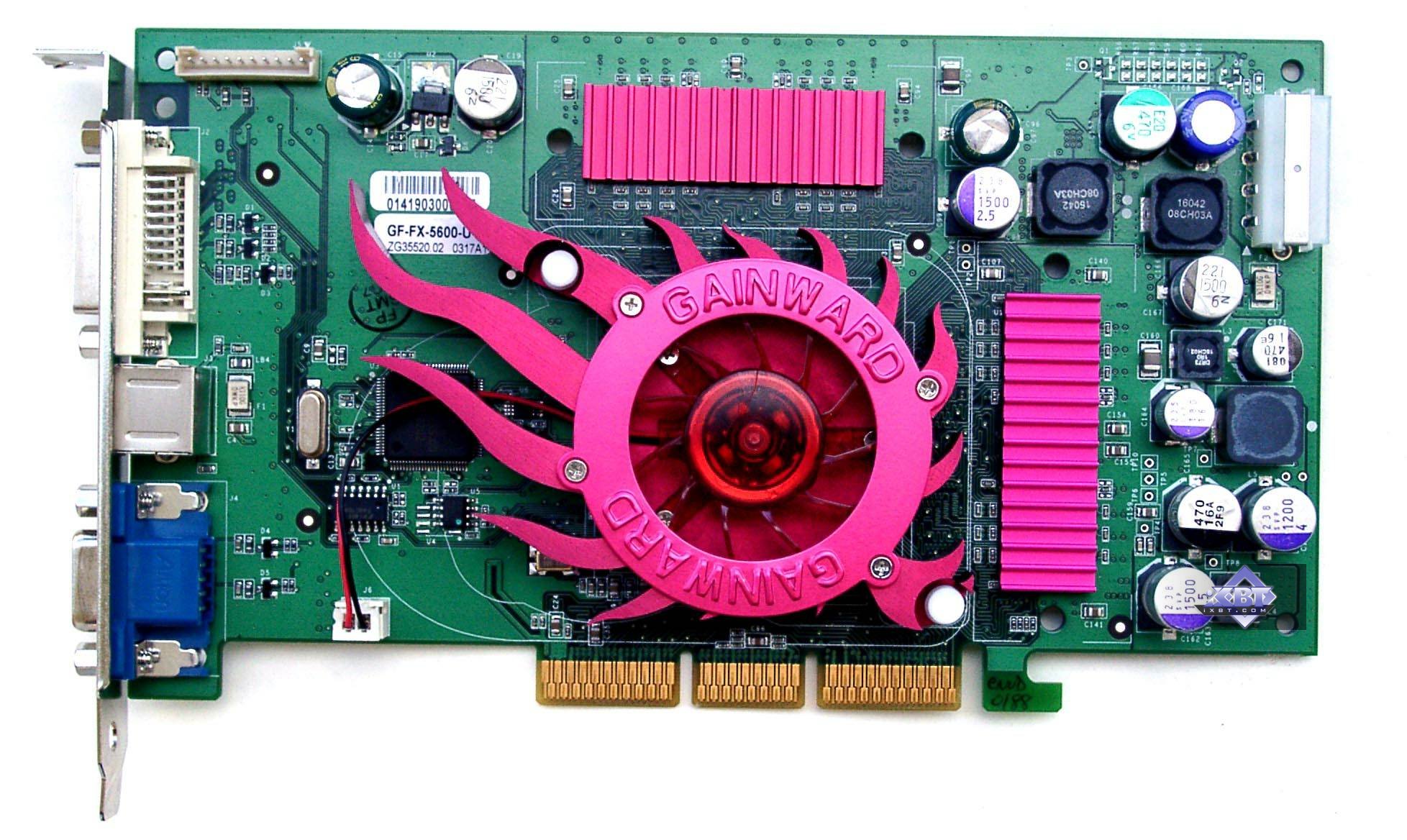
| Gainward FX PowerPack Ultra/760 XP Golden Sample |
| Hynix memory chips of 2.2ns access time; it corresponds to 454 (908)
MHz. The memory is clocked at 400 (800) MHz, the GPU runs at 400 MHz (50
MHz over the old revision). 128bit memory interface. |

|
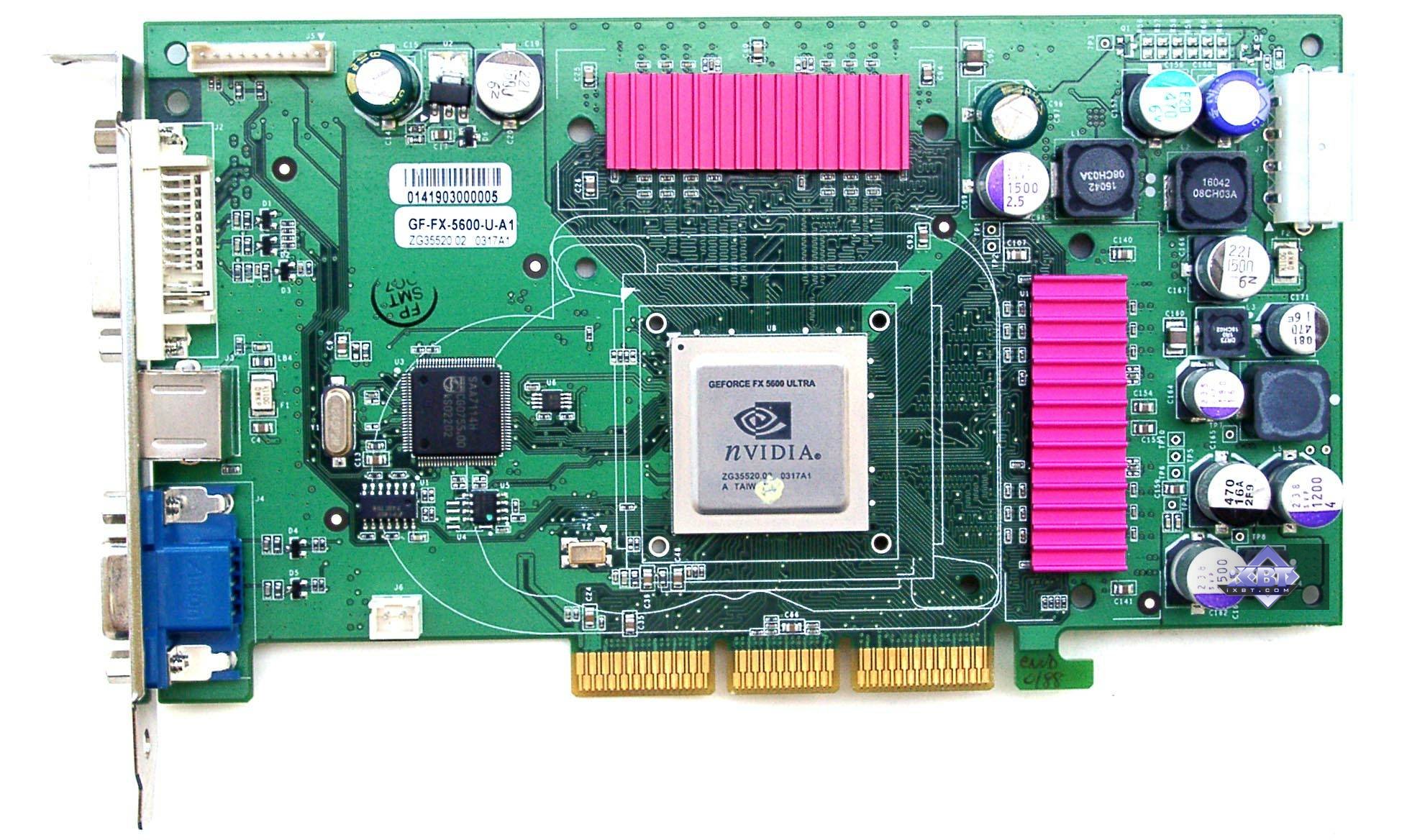
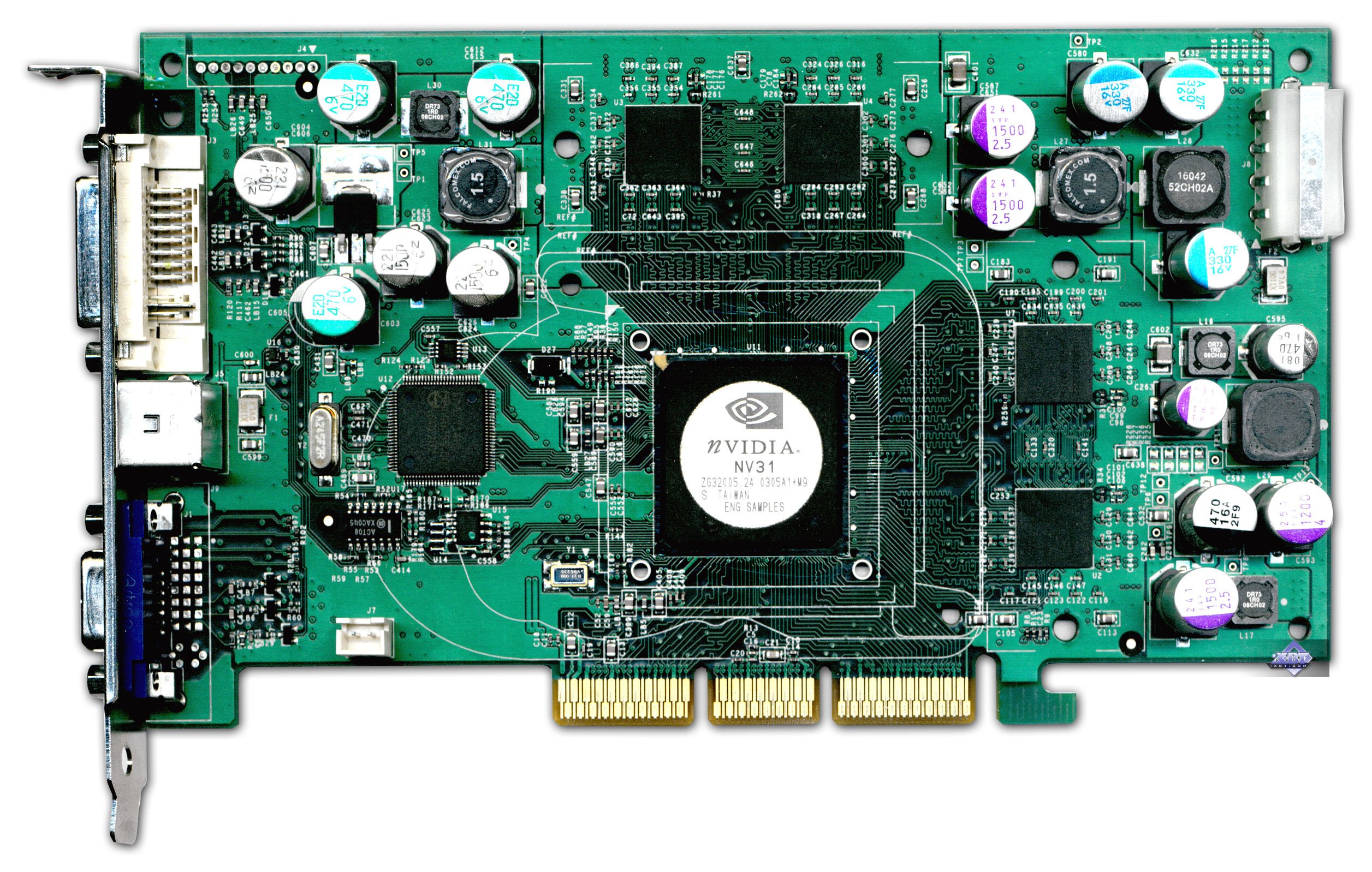
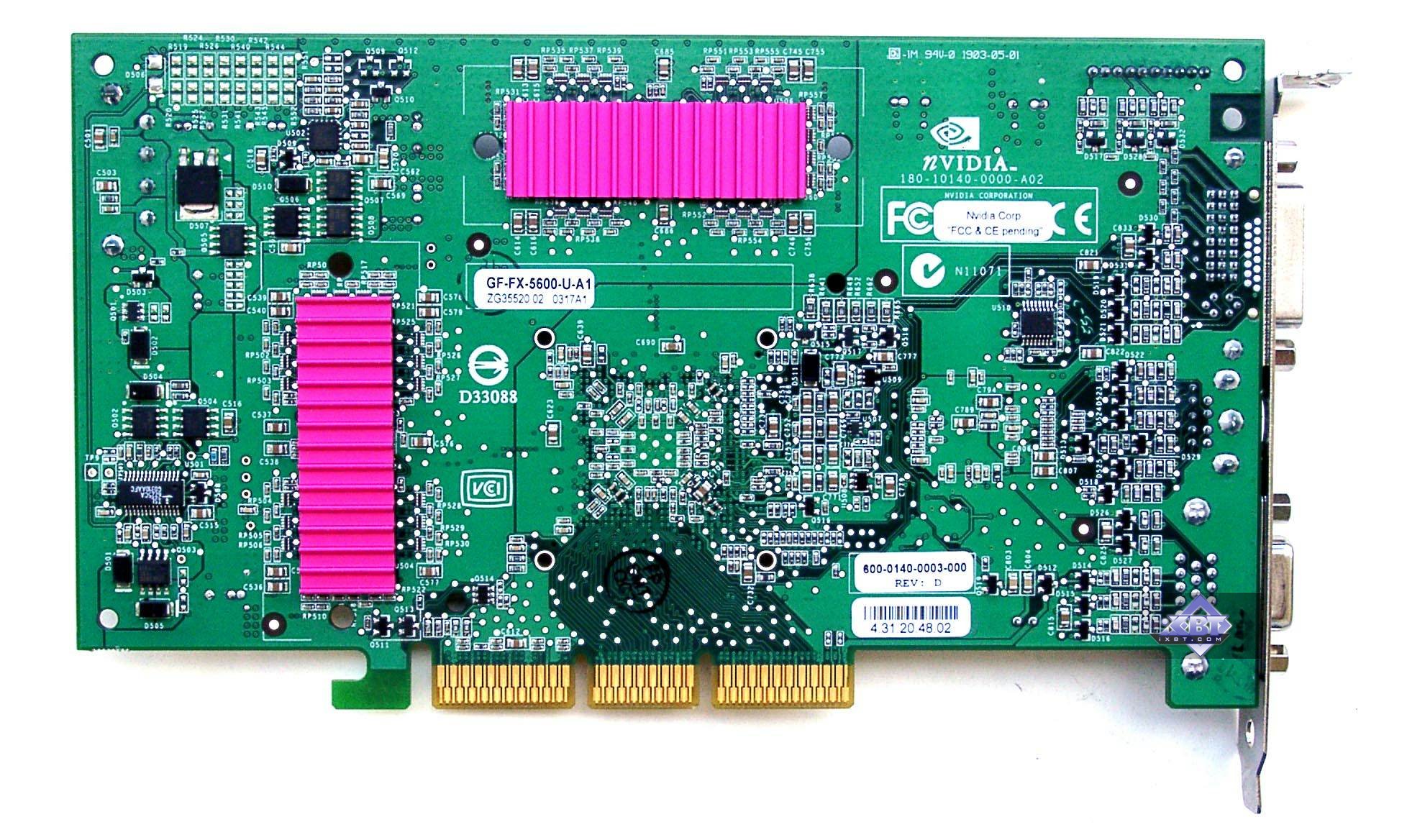
| Comparison with the reference design, front view |
| Gainward FX PowerPack Ultra/760 XP Golden Sample |
Reference card NVIDIA GeForce FX 5600 Ultra |

|

|

|
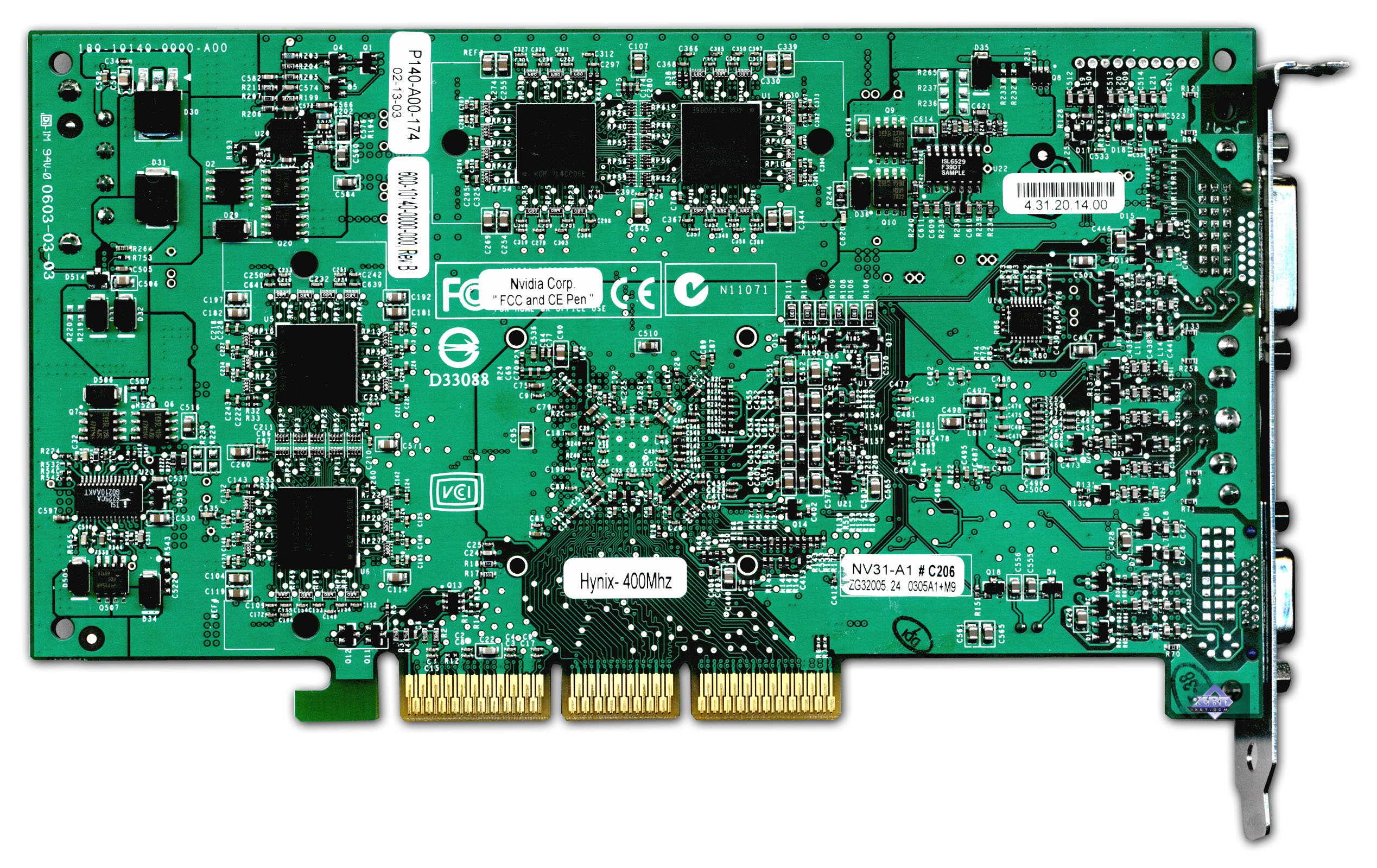
| Comparison with the reference design, back view |
| Gainward FX PowerPack Ultra/760 XP Golden Sample |
Reference card NVIDIA GeForce FX 5600 Ultra |

|

|
|
The design looks like the reference one, but there is some difference.
The PCB design is actually less complicated and, therefore, cheaper.
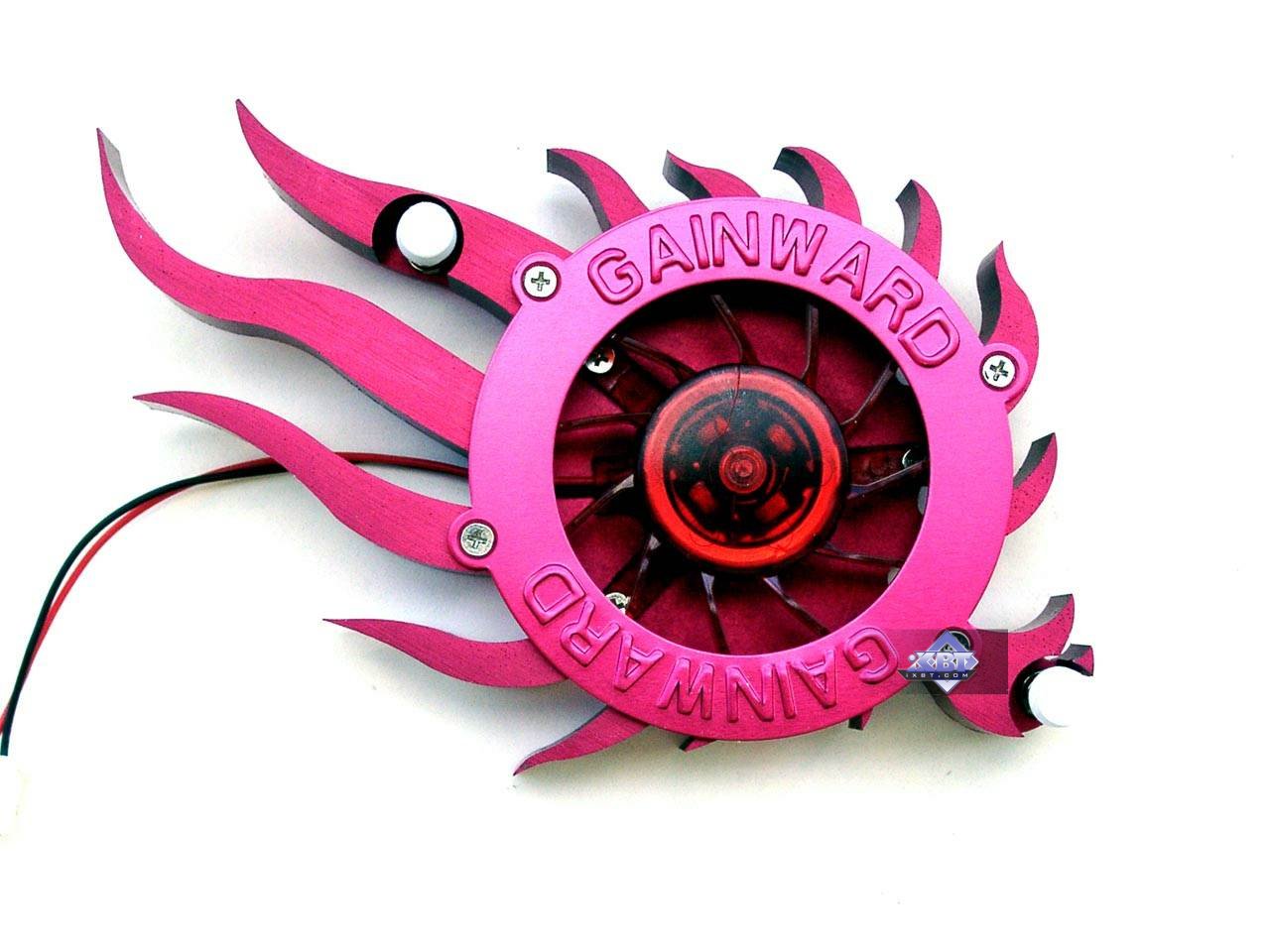
Now comes the cooler.
| Gainward FX PowerPack Ultra/760 XP Golden Sample |
| The cooler looks like a flame tip. I wish this sample would have the
red PCB instead of the green one of the reference solution because the
flame would look much more effective. The memory is covered with heatsinks
which are properly glued to the chips. |

|
The card's bundled with the Philips 7114 codec for VIVO control:

The TV-out functions lie on the shoulders of the GeForce FX 5600 chip (the
Philips 7114 is used only for VI).
As usual, the GPU GeForce FX 5600 rests under the cooler:

Have a look at the FlipChip package which was earlier used for speedy FX
5800/5900 cards. This package with a peculiar cover is the distinguishing
feature of the 400 MHz revision of the 5600 Ultra:

The PCB is protected from pickups, the section with the memory chips is
well shielded:

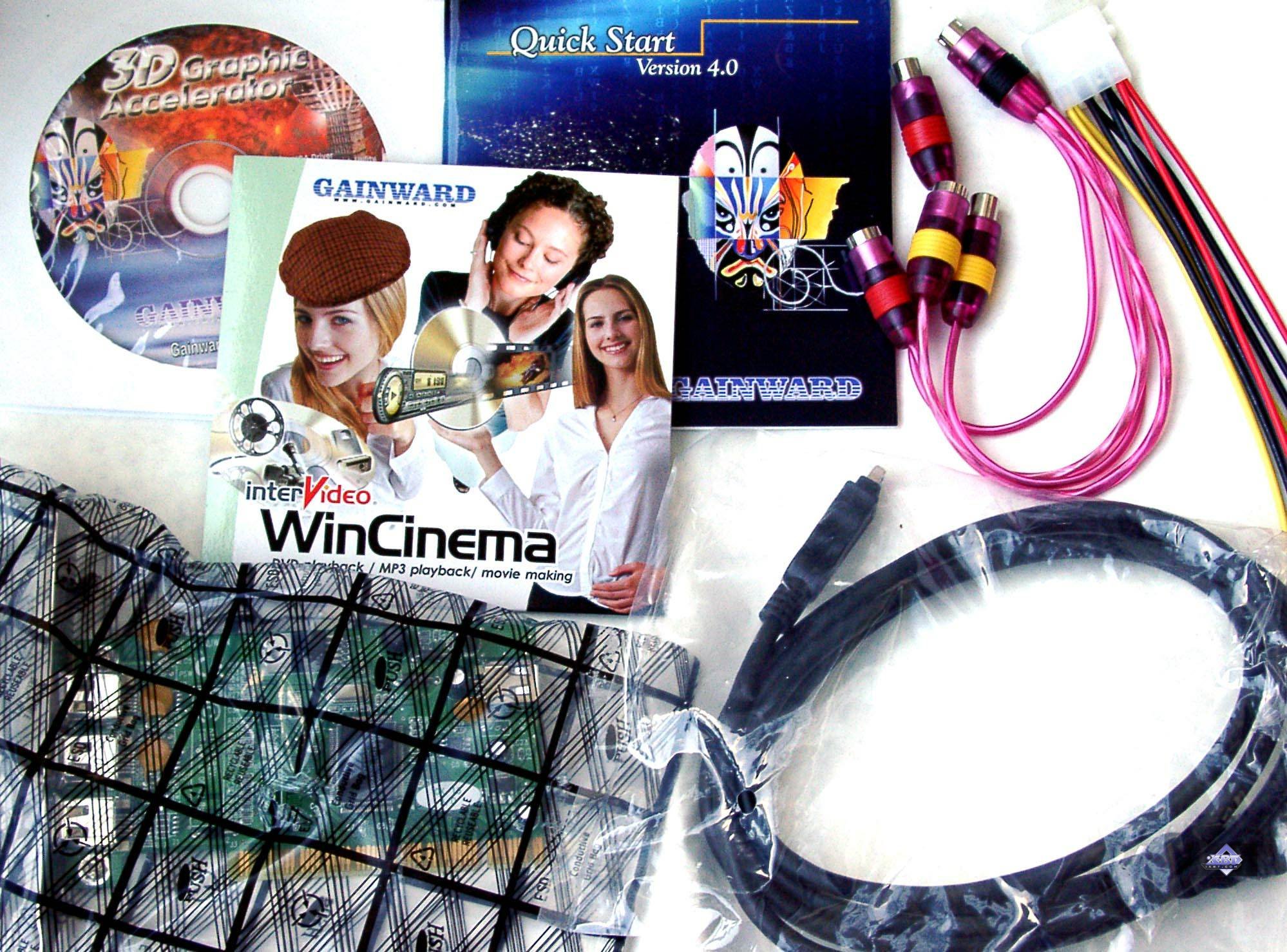
Now let's see what the box contains:
|
| Gainward FX PowerPack Ultra/760 XP Golden Sample |
| User Guide, CDs with drivers and utilities, WinDVD, s/w for VIVO, adapters
and extenders for TV-out (for VIVO as well), DVI-to-d-Sub adapter, and
FireWire controller. |

|
The card ships in the retail package.
|
| Gainward FX PowerPack Ultra/760 XP Golden Sample |
| It comes in a big colorful box. Unfortunately, all necessary data including
the chip name are written on one sticker in a small print. |

|
Testbed and drivers
Testbed:
-
Pentium 4 3200 MHz based computer:
-
Intel Pentium 4 3200 MHz CPU;
-
DFI LANParty Pro875 (i875P) mainboard;
-
1024 MB DDR SDRAM;
-
Seagate Barracuda IV 40GB HDD;
-
Windows XP SP1; DirectX 9.0a;
-
ViewSonic P810 (21") and ViewSonic P817 (21")
monitors.
-
NVIDIA drivers v44.65.
VSync off, S3TC off in applications.
Cards used for comparison:
-
Gainward Powerpack4 Ultra/750 (GeForce Ti 4600, 300/325 (650) MHz, 128
MB);
-
ATI RADEON 9600 PRO (400/300 (600) MHz, 128 MB, driver 6.343);
-
MSI FX5600 128-VTD (GeForce FX 5600, 325/275 (550) MHz, 128 MB).
Test results
Before we start examining 2D quality, I should say there are no complete
techniques for objective 2D quality estimation because:
-
2D quality much depends on certain samples for almost all modern 3D accelerators;
-
Besides videocards, 2D quality depends on monitors and cables;
-
Moreover, certain monitors might not work properly with certain video cards.
With the ViewSonic P817 monitor and BNC Bargo cable the card showed excellent
quality at the following resolutions and clock speeds:
|
| Gainward FX PowerPack Ultra/760 XP Golden Sample |
1600x1200x85Hz, 1280x1024x120Hz, 1024x768x160Hz (nothing wrong
with the quality!) |
|
Test results: comparison of the cards' performance
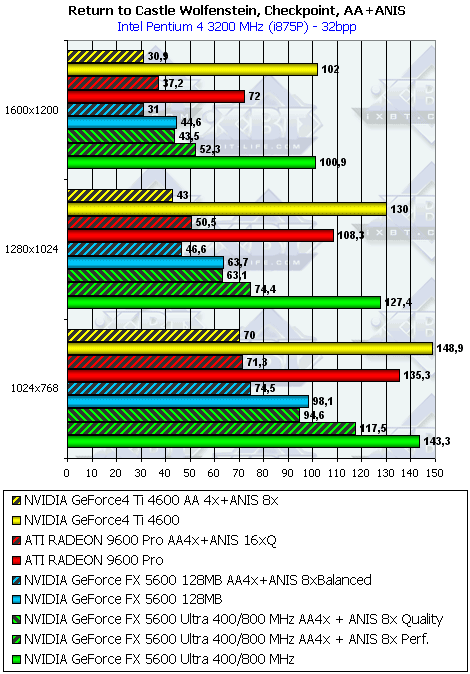
Conventional signs: ANISO 8xP - Anisotropic 8x Performance (earlier it
was called Balanced), ANISO 8xQ - Anisotropic 8x Quality, ANISO 16xQ -
Anisotropic 16x Quality.
Test applications:
-
Return to Castle Wolfenstein (MultiPlayer) (id Software/Activision) - OpenGL,
multitexturing, Checkpoint-demo,
test settings - maximum, S3TC OFF, the configurations can be downloaded
from here
-
Serious Sam: The Second Encounter v.1.05 (Croteam/GodGames) - OpenGL, multitexturing,
Grand Cathedral demo, test settings: quality, S3TC OFF
-
Quake3 Arena v.1.17 (id Software/Activision) - OpenGL, multitexturing,
Quaver,
test settings - maximum: detailing level - High, texture detailing
level - #4, S3TC OFF, smoothness of curves is much
increased through variables r_subdivisions "1" and r_lodCurveError
"30000" (at default r_lodCurveError is 250 !), the configurations
can be downloaded from
here
-
Unreal Tournament 2003 Demo (Digital Extreme/Epic Games) - Direct3D, Vertex
Shaders, Hardware T&L, Dot3, cube texturing, default quality
-
Code Creatures Benchmark Pro (CodeCult) - the game that demonstrates card's
operation in DirectX 8.1, Shaders, HW T&L.
-
AquaMark (Massive Development) the game that demonstrates card's operation
in DirectX 8.1, Shaders, HW T&L.
-
RightMark 3D v.0.4 (one
of game scenes) - DirectX 8.1, Dot3, cube texturing, shadow buffers, vertex
and pixel shaders (1.1, 1.4).
Quake3 Arena, Quaver


Serious Sam: The Second Encounter, Grand Cathedral


Return to Castle Wolfenstein (Multiplayer), Checkpoint



Code Creatures


Unreal Tournament 2003 DEMO


AquaMark


RightMark 3D


|
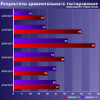
It's obvious that this card is unequaled when the AA and/or anisotropy
are enabled (except the tests based on shader technologies). Remember that
it's stupid to use modern accelerators without these quality improving
functions enabled. Does the 5600 Ultra justify the money users pay for
such cards? If you have a GeForce4 Ti and you are interested in AA and/or
anisotropy it doesn't make sense to consider cards weaker than GeForce
FX 5800 (or RADEON 9700 PRO). But if you want to replace your old card
with something like the GeForce4 Ti 4600, then you should look at the GeForce
Fx 5600 Ultra.
Conclusion
The Gainward FX PowerPack Ultra/760 XP Golden Sample can give you:
-
a higher speed in AA and/or anisotropy than its competitors (RADEON 9600
or GF4Ti 4200);
-
potentially more technological solution with the DX9 support (such games
are right around the corner already);
-
VIVO support.
In our 3Digest
you can find full comparison characteristics for video cards of this and
other classes.
Again, remember that there are two types of the GeForce FX 5600 Ultra
cards on the market - with the frequency of 350MHz and 400 MHz. Be careful!
Write a comment below. No registration needed!
|
|
 |
|
|
|